
I was never quite sure what I wanted to be when I grew up.
I double majored in Business and History in college—which means I can balance a checkbook and am disproportionately useful during Jeopardy—and spent my college years as a ski instructor and bartender.
And then… things took a few turns.
I tried accounting. That lasted long enough for me to realize I’d rather stick a pencil in my eye than actually be an accountant. I went to manicuring school. Became an esthetician. Worked in salons. Moved to California and worked in Hollywood as an on-set manicurist for photo shoots and commercials. I tried to become a makeup artist. That one didn’t quite work out. I managed salons. Worked in beauty product sales. Taught esthetics. Waited tables. Owned and ran a Taekwondo school, where I was also the chief instructor, a national judge and regional tournament coordinator.
For a while, I even ran a waxing business out of the back of my Taekwondo school—giving an entirely new meaning to “wax on, wax off.” Then came politics. I started at the California State Assembly as a district scheduler and eventually became a Legislative Director. Later, I joined a congressional campaign as the Operations Manager. And eventually, life brought me to Arizona, where I spent twelve years working alongside the CEO of a heavy equipment company. Not exactly a straight line.
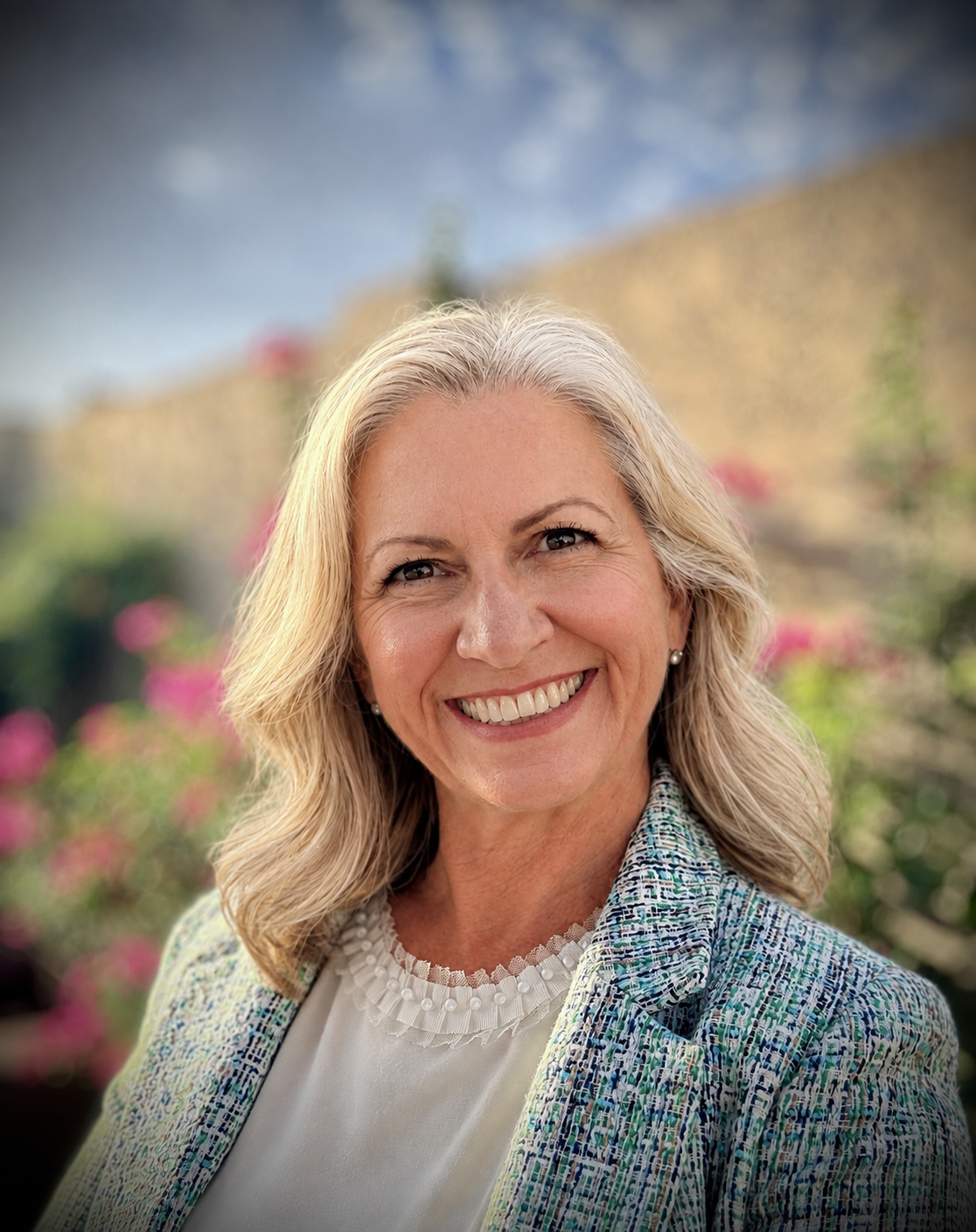
But looking back, all those seemingly unrelated careers have more in common than you might think.
I’ve spent most of my career making other people look good.
Sometimes literally.
Sometimes it meant making someone camera-ready. Other times it meant making a politician prepared, an executive organized, an event seamless, a program successful or a business look like it had everything under control.
Different industries. Different jobs. Same basic idea: Understand what needs to happen behind the scenes so the person out front can be great at what they do.
Turns out, I got very good at the behind-the-scenes part.
I learned how to walk into an unfamiliar situation and get up to speed quickly. How to ask the right questions. How to manage a lot of moving pieces. How to work with very different people. How to anticipate what someone will need before they ask for it. And how to solve a problem when there isn’t an instruction manual. Most of all, I learned how to take something from:
“We really need to do this.” → “It’s done.”
Eventually, that became Elan.
After twelve years supporting the CEO of a heavy equipment company, he retired. Leadership changed, the executive team was overhauled, and eventually my position disappeared too. I could have looked for another executive role.
Instead, I finally had to answer the question I’d been asking since college: What do I want to be when I grow up?
Turns out, I already knew. I wanted to keep doing the thing I’d been doing all along: helping other people look good at what they do.
This time, I wanted to do it for business owners.
So I built Elan.
Today, I work with people who are really good at their thing but have discovered that owning a business also makes them responsible for the website, the marketing, the systems, the projects, the client experience—and approximately 47 other things they never intended to become experts in.
That’s where my slightly unconventional résumé comes in handy.
I know how to learn quickly. I know how to find answers. I know how to take an idea and turn it into something tangible. And I’m very comfortable being handed something that starts with:
“I have no idea how to do this, but…”
Those are usually my favorite projects.
You don’t need to know what service you need.
Maybe you need something built. Maybe something isn’t working. Maybe you’ve had an idea sitting on your list for six months. Or maybe you just need another capable person to look at the whole thing and say: “Okay. Here’s what we do next.”
Tell me what you’re trying to accomplish. We’ll start there.
You do what you love. I’ll build around it.